
Publications & Reports
N2 brings together regulatory knowledge, shared learning, and strategic insight to strengthen clinical research across Canada. This section features key reports, publications, and strategic plans that highlight emerging trends, cross-sector collaboration, and evolving best practices.
N2 Strategic Plan
N2 brings together regulatory knowledge, shared learning, and strategic insight to strengthen clinical research across Canada. This section highlights key reports and publications that showcase emerging trends, collaboration, and evolving best practices.
N2 Strategic Plan (2023-2027)
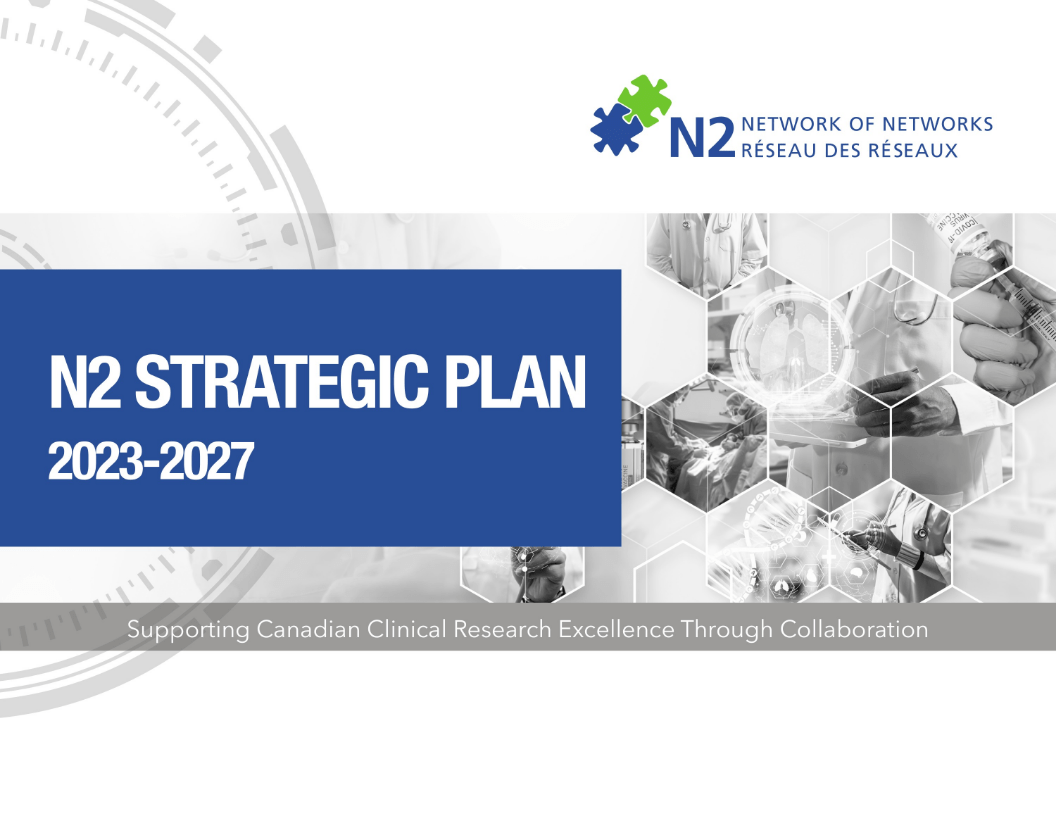

Mission
To enable and enhance clinical research capability and capacity in Canada.

Vision
Canada’s alliance for excellence in clinical research.
N2 Annual Reports
N2’s Annual Reports provide a clear snapshot of our progress each year, highlighting key milestones, member achievements, and initiatives shaping Canada’s clinical research landscape. They showcase the growth of our national alliance, advances in equity and operations, and the real-world impact of our collective work. Whether you’re a long-time member or new to N2, these reports offer a window into our momentum and shared purpose.
2025 N2 Annual Report
Highlights:
-
-
National readiness for ICH E6(R3) launched
-
Updated CITI Canada GCP Basic and Refresher courses released
-
Most comprehensive review of N2 Clinical Research SOPs since 2008 initiated
-
Canada’s first pan-Canadian Clinical Research Workforce Strategy supported
- EDIA Champion Initiative launched to move equity into action
- 6 N2-hosted events delivered, engaging 3,000+ participants nationwide
- 12 additional national events supported through N2 participation
-
2024 N2 Annual Report
Highlights:
-
-
Membership grew to 195 organizations across Canada
-
Added four new French SOPs to support bilingual research environments
-
Began updating the GCP course for ICH E6(R3) with input from 50+ stakeholders
-
Expanded CCTAM visibility and use through sponsor and network engagement
-
Co-hosted regional meetings and contributed to national and international collaborations
-
Completed the first full year of the 2023–2027 Strategic Plan, advancing work across its four pillars
-
2023 N2 Annual Report
Highlights:
-
-
Launched the 2023-2027 Strategic Plan
-
Increased member engagement through high meeting attendance and active committees
-
Expanded French accessibility for SOPs and member resources
-
Advanced GCP course updates for ICH E6(R3)
-
Took on leadership of the Canadian Clinical Trials Asset Map
-
Grew communications reach through LinkedIn and member spotlights
-
Strengthened national partnerships
-
N2 Annual Conference Summaries
Below is a collection of summaries from past N2 Annual Conferences. Each one captures key discussions, takeaways, and updates shared across the network, offering a quick way to revisit what mattered most each year.
2025 N2 Annual Conference
2024 N2 Annual Conference
2023 N2 Annual Conference
2022 N2 Annual Conference
2021 N2 Annual Conference
2020 N2 Annual Conference
2019 N2 Annual Conference

White Papers
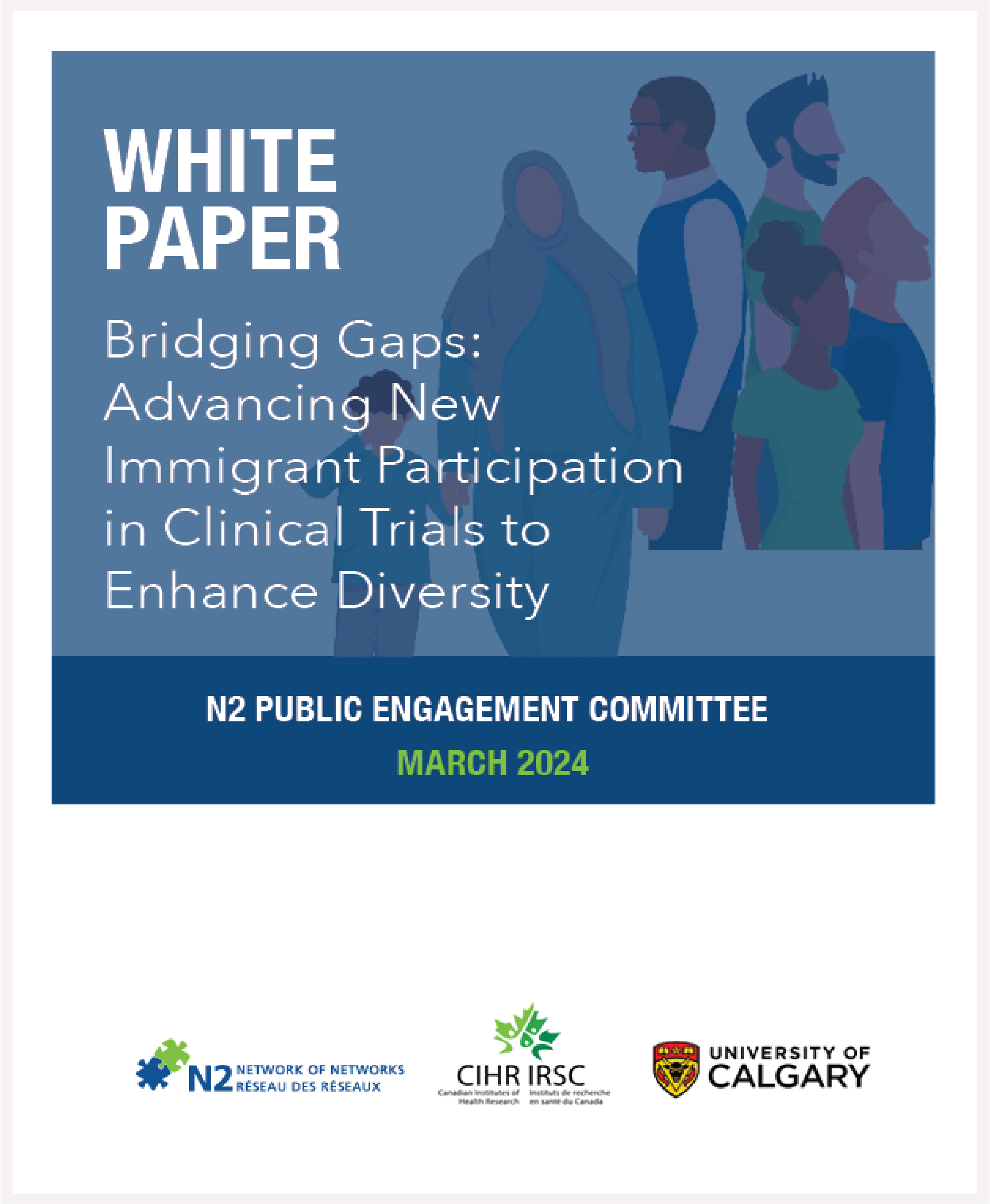
Bridging the Gaps – Advancing New Immigrant Participation in Clinical Trials
By the N2 Public Engagement Committee
This white paper explores how to make clinical research more inclusive by engaging communities intentionally and equitably. It outlines key principles for working with underrepresented groups, highlights common barriers to participation, and offers practical approaches to strengthen trust and connection. Inclusive research goes beyond recruitment — it requires thoughtful engagement, reduced barriers, and relationships built on respect and shared understanding
Why It Matters
Clinical trials shape future care, and meaningful representation ensures treatments work across diverse populations. The paper highlights the importance of engaging new immigrant communities and offers practical steps to support participation. Involving people from varied racial, ethnic, socioeconomic, and geographic backgrounds strengthens trust and improves outcomes for all.
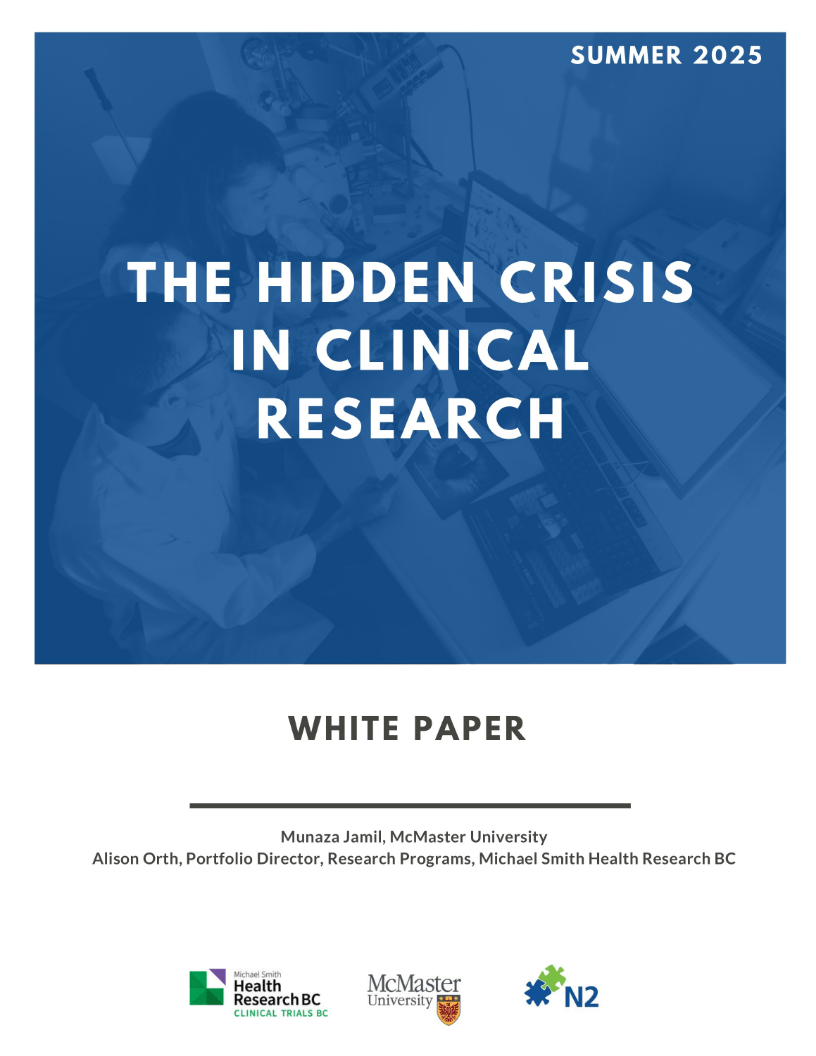
The Hidden Crisis in
Clinical Research
By Munaza Jamil and Alison Orth
This white paper explores the current state and future of Canada’s Clinical Research Professional (CRP) workforce. Drawing on consultations and survey data, it identifies a major gap: the need for a cohesive national strategy to recognize and support CRPs. The authors outline recruitment and retention challenges, propose a pan-Canadian competency framework, and recommend practical steps to strengthen CRP career pathways, recognition, and support.
Why It Matters
Clinical Research Professionals are essential to delivering ethical, high-quality, and efficient health research — yet their roles are often undervalued and inconsistently defined. Without a stable, well-supported workforce, studies face delays, protocol deviations, and inefficiencies that affect patient care and innovation. Investing in and professionalizing this workforce is critical to building research that is equitable, timely, and trusted.
Initiative to Streamline Clinical Trials (ISCT)
Launched in 2012 in response to the CCRA’s State of Cancer Clinical Trials in Canada report, the ISCT Working Group developed practical, regulatory-compliant recommendations to improve the efficiency and feasibility of academic drug and biologic trials. The recommendations, finalized in 2014, aim to reduce unnecessary burden while maintaining compliance with Health Canada and ICH GCP requirements.
2017 Survey Snapshot
A national survey of 75 clinical research professionals across 8 provinces assessed the uptake and impact of ISCT recommendations.
-
Adoption: Many sites had already implemented ISCT-aligned practices, though uptake varied due to uncertainty around Health Canada’s position.
-
Impact: Respondents reported gains in efficiency, quality, and timeliness—particularly in CTA and safety reporting, monitoring, drug accountability, facilities, and trial costs.
-
Barriers: Lack of formal Health Canada endorsement was the most common challenge. Additional barriers included institutional resistance, limited awareness, and resource constraints.